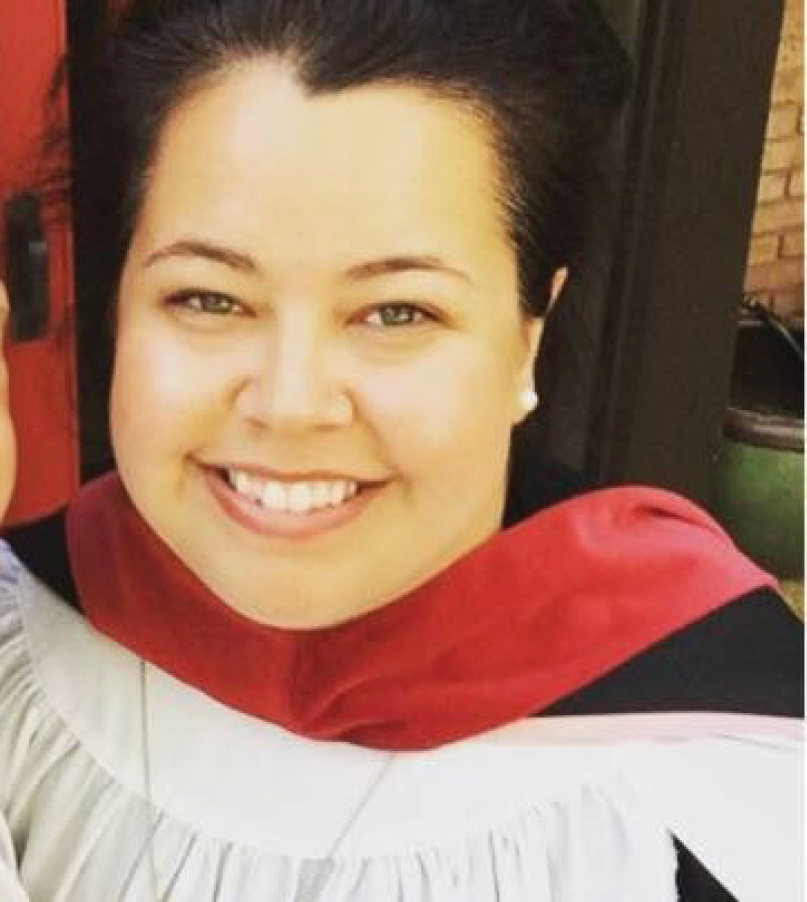
 Jessica Nelson holds degrees in music and liturgy from Millsaps College (2005) and Seabury-Western Theological Seminary (2009) and the Colleague Certificate from the American Guild of Organists. She has directed the Mississippi Conference on Church Music and Liturgy, served on the board of the Association of Anglican Musicians, and served two triennia on the Episcopal Church’s Standing Commission on Liturgy and Music. Prior to her call to St. Andrew’s, Jessica was organist/choirmaster at All Saints’ Episcopal Church in Tupelo and taught on the faculties of the University of North Alabama and Northeast Mississippi Community College. She is the editor of Church Publishing’s 2022 Ponder Anew: Conversations in 21st Century Church Music, a collection of essays, interviews, and sermons focussed on the changing landscape of church music. Her published works are available from St. James Music Press, Paraclete Press, and Selah Publishing. She sat down with TME editor Wil Oakes to discuss church music, organs, and the joy of taking part in liturgy.
TME: So, for starters, tell me how you found your way to a career as an organist.
JN: So, my undergrad degree is in piano performance, and I took organ as a second instrument, just because I thought that if I could learn enough to play hymns, I could substitute places and earn money. I was not good at it. I was not disciplined. I never practiced. But then I wound up going to seminary for a sacred music degree, and was the organ scholar there in the chapel at Seabury, and played maybe 10 to 12 services every week and just really grew to love it a lot. And people think that organ and piano are so similar, but, you know, aside from the keyboard, they’re really not. The piano is a percussion instrument and organ is a wind instrument, so you just approach them in completely different ways, but they’re a lot of fun to play.
TME: Tell me a bit about the organ at St. Andrew’s.
JN: Our organ is an Aeolian Skinner, and at the time it was built, they were the most important, the best American builder based out of Boston. There aren’t very many in Mississippi, I think just maybe one or two others. This one was originally built in the 60s and replaced an instrument that I think was acquired from a movie theater—we had a theater organ! and then this replaced that in the 60s. In the early 90s, it was revised, which means that a builder came in and did a lot of once a century kind of maintenance, and replaced a lot of the mechanical portions. It got a new console at that point.
TME: And the console is the part you actually play?
JN: Yeah, the console is just the keyboards. And what you see is just the tip of the iceberg. The organ is all over the building, including under the floor—the pipes you see, the pipes you don’t see, like all kinds of wiring and tubes and whatnot. So the console was replaced them, and some digital stops were added at that point as well.
TME: So it’s partly mechanical and partly electronic?
JN: Some organs are totally mechanical. Those are called tracker organs. So when you press a key, it activates a series of levers which goes directly to the pipe. Our organ is electropneumatic, which means that it’s based on electrical impulses. So if I press a key or press a button, it’s like synapses firing, which eventually get to the pipe and allow it to speak.
TME: It’s cool to think about the pipes being under the floors and all around the building. Almost like the entire building is the instrument.
JN: We don’t actually have any pipes under the floor, but the blower is under the floor, and you access it through the sacristy. And when you turn the organ on and you hear the blower come on, it’s like the whole building is like sucking up its breath, getting ready to sing.
TME: Oh, that’s interesting you use that word. It’s like it’s another member of the choir.
JN: Absolutely, because organs mimic the human voice better than any other instrument. If you play a piano, the note starts decaying immediately. If you play guitar, the note starts decaying immediately. And that doesn’t mean that they don’t have their place, but if you play the organ, the note sustains and supports congregational singing. They’re awfully expensive, of course, but they’re these feats of engineering and architecture and music, and without them, not only would the church not sound the same, it literally wouldn’t look the same.
TME: Tell me about what it’s like for you personally playing at services.
JN: Without being super cheesy about it, accompanying hymns, I think is my most important job here. Helping the congregation sing. Which is good, because it’s like my favorite thing in the whole entire world to do. When you’ve got this room full of people that are all breathing in at the same time, you know, that’s pretty incredible.
TME: Do you get feedback from the congregation often?
JN: Yeah, that’s always really lovely to hear. You know, when somebody tells me that something is their favorite hymn or they sang it at some special service, like a funeral or a wedding. I love it when people come and tell me things. Love it. I let kids come play the organ after church—there’s nothing they can do to break it that can’t be easily fixed!
TME: What are some of your very favorite hymns or even just pieces to play?
JN: My favorite hymn of all time is “King of glory, king of peace.” I really love Bach. I mean, that’s super predictable. I really love promoting new works by living composers, by women and people of color and other underrepresented folks.
TME: Can we get some recommendations?
JN: For sure!
Hear some of Jessica’s Christmas music suggestions on either Apple Music or Spotify!