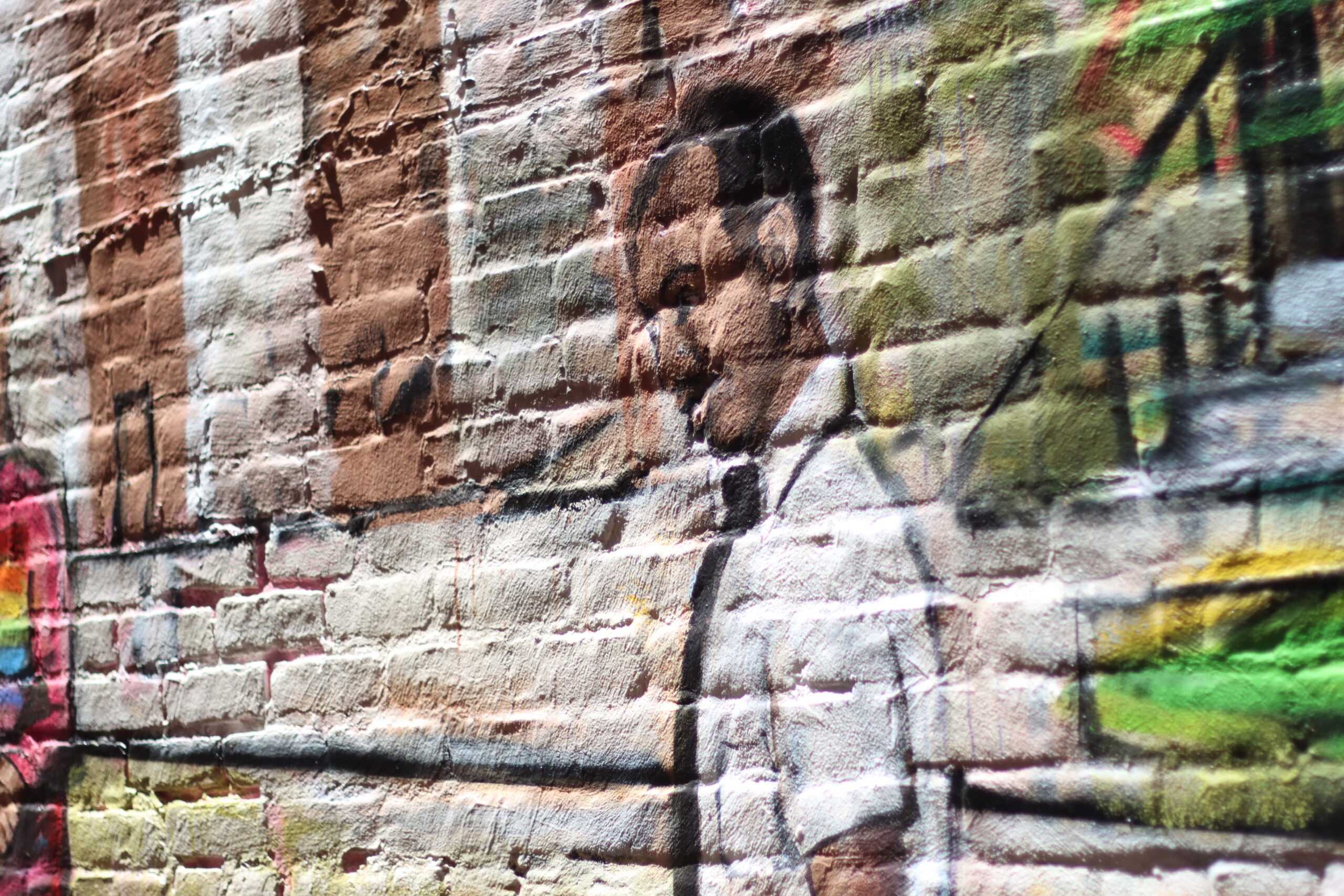
Last year, Downtown Jackson Partners approached me with the idea of having an artist paint a mural on the side of Allin House.
My immediate reaction, I will admit, was skepticism: Our Diocesan office building tells the story of our ministry in Mississippi, and any depiction on the building would be rooted in that ministry to all of God’s people in this place. A mural would not be secular in nature—but would show our faith, our service and our inclusivity.
Downtown Jackson Partners didn’t blink. They suggested that I write a brief introduction to our ministry that could be shared with artists who had an interest in community art—and we’d let artist applicants come back to us with ideas.
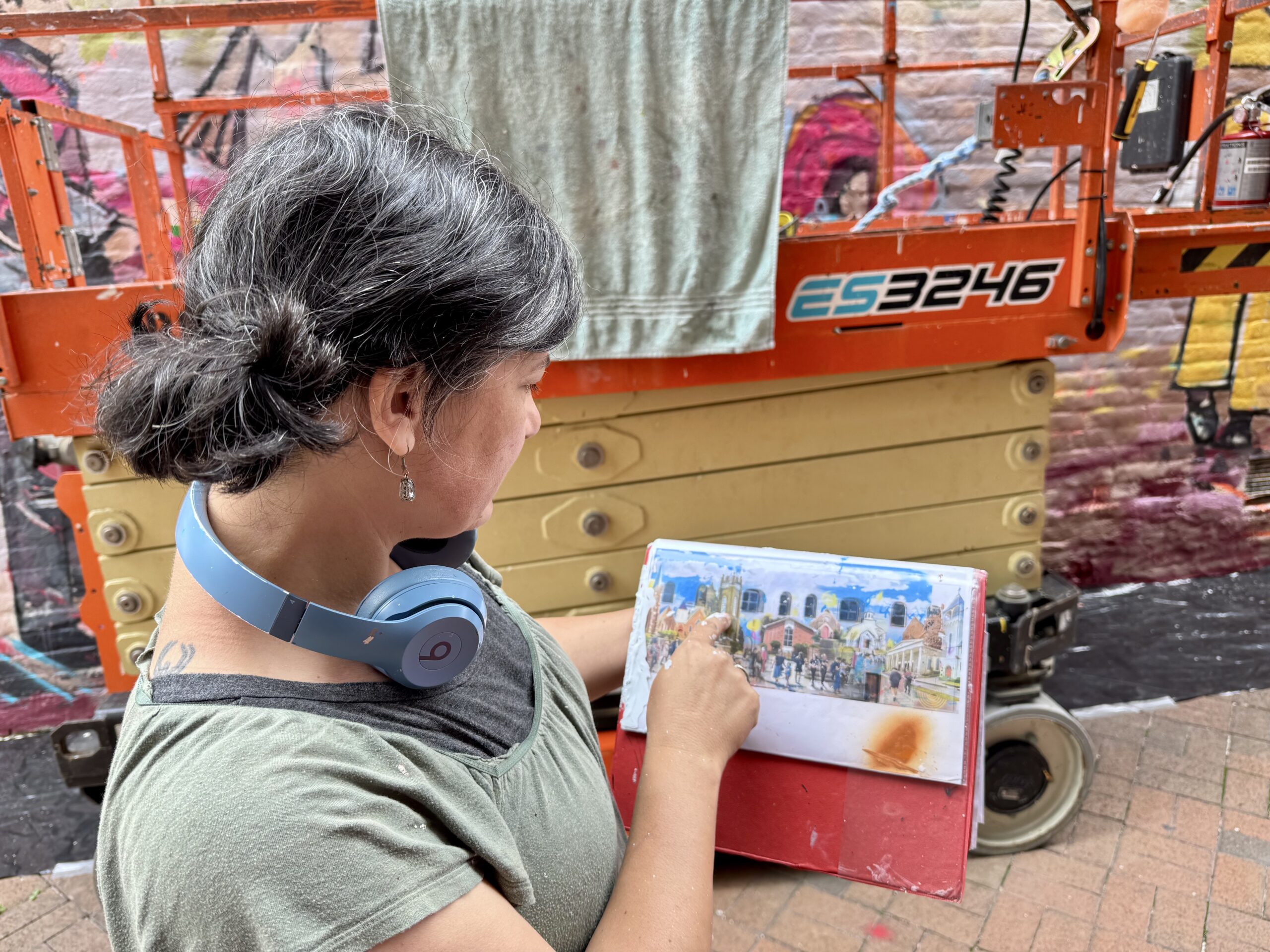
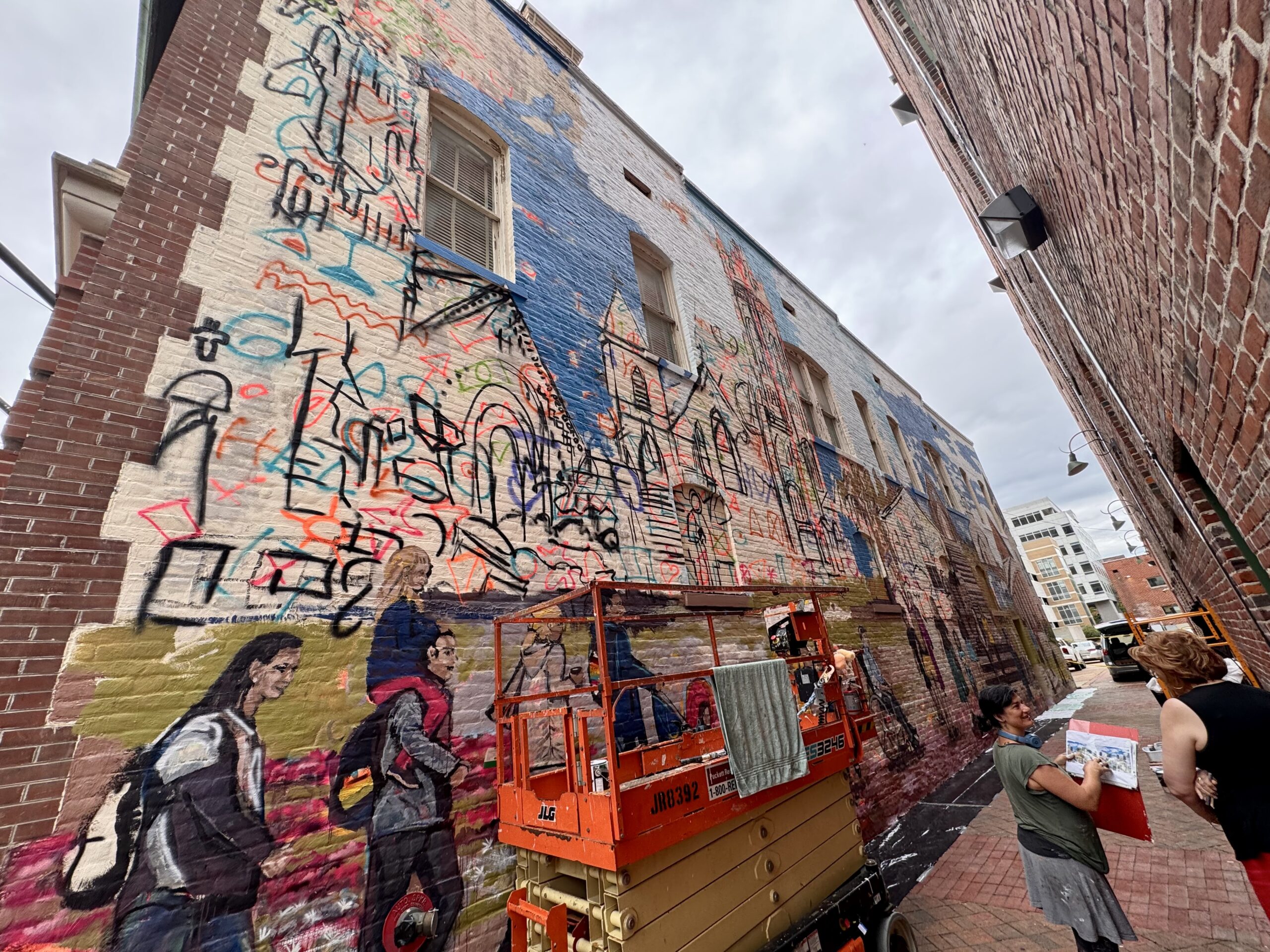
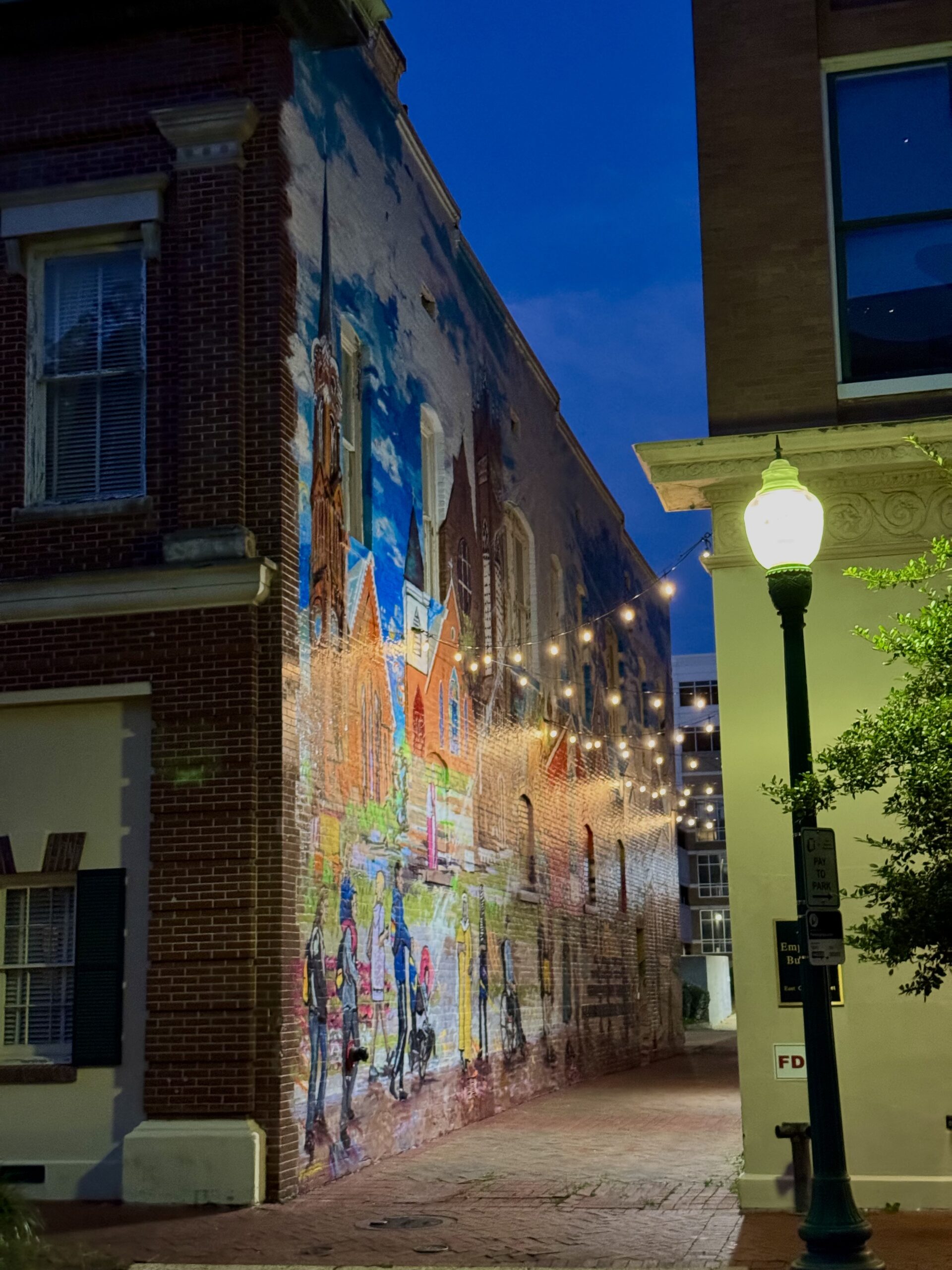
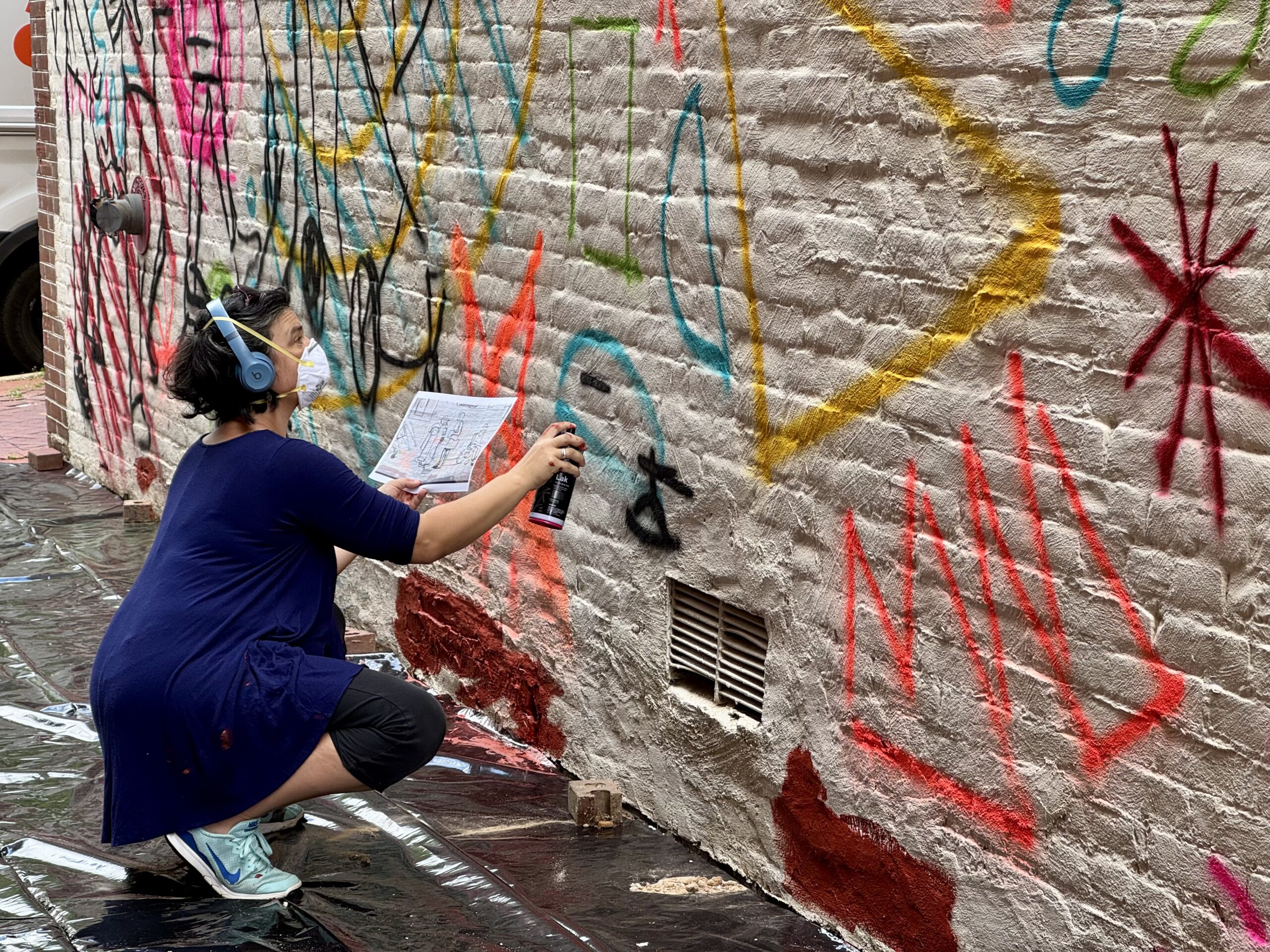
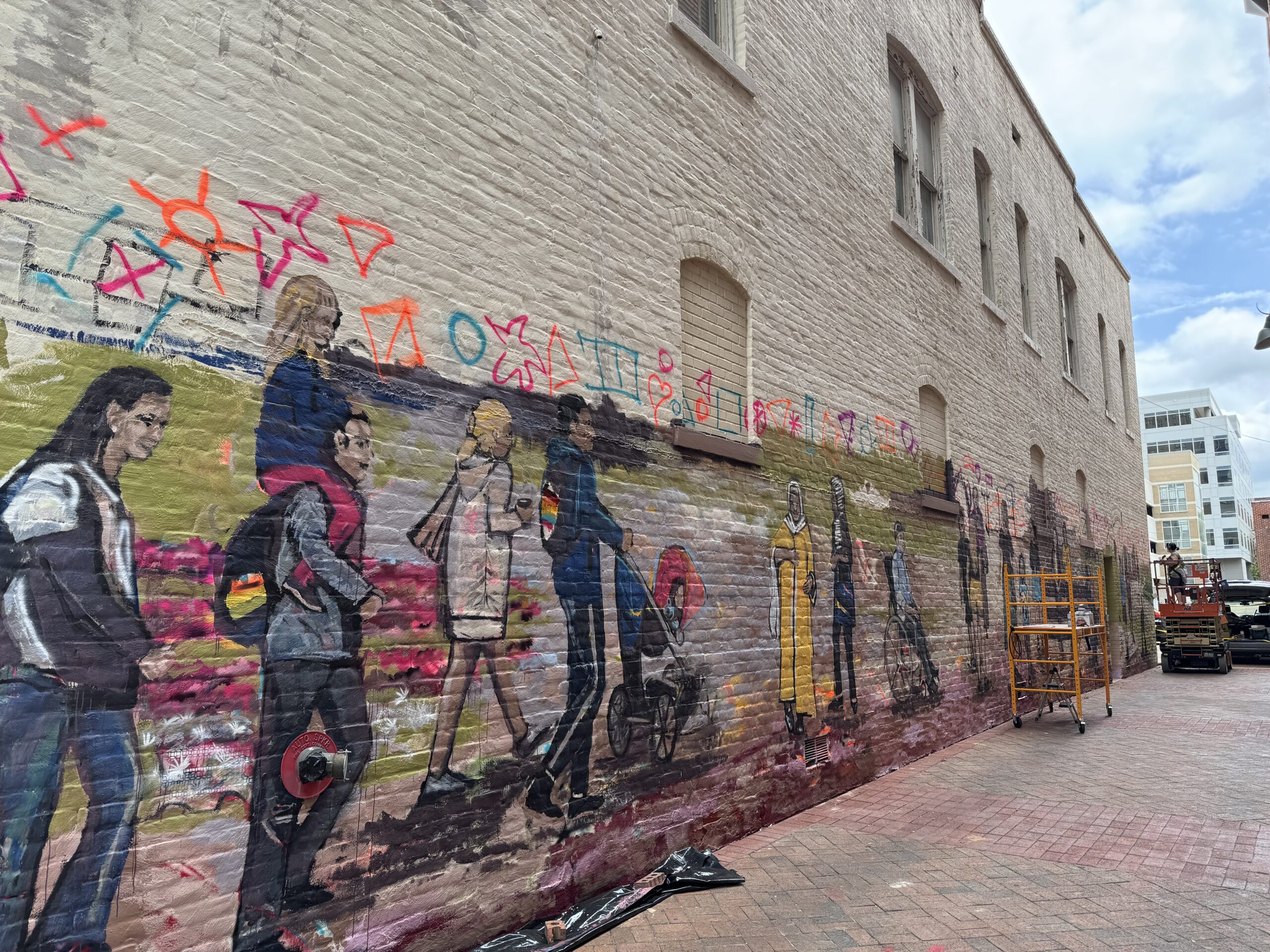
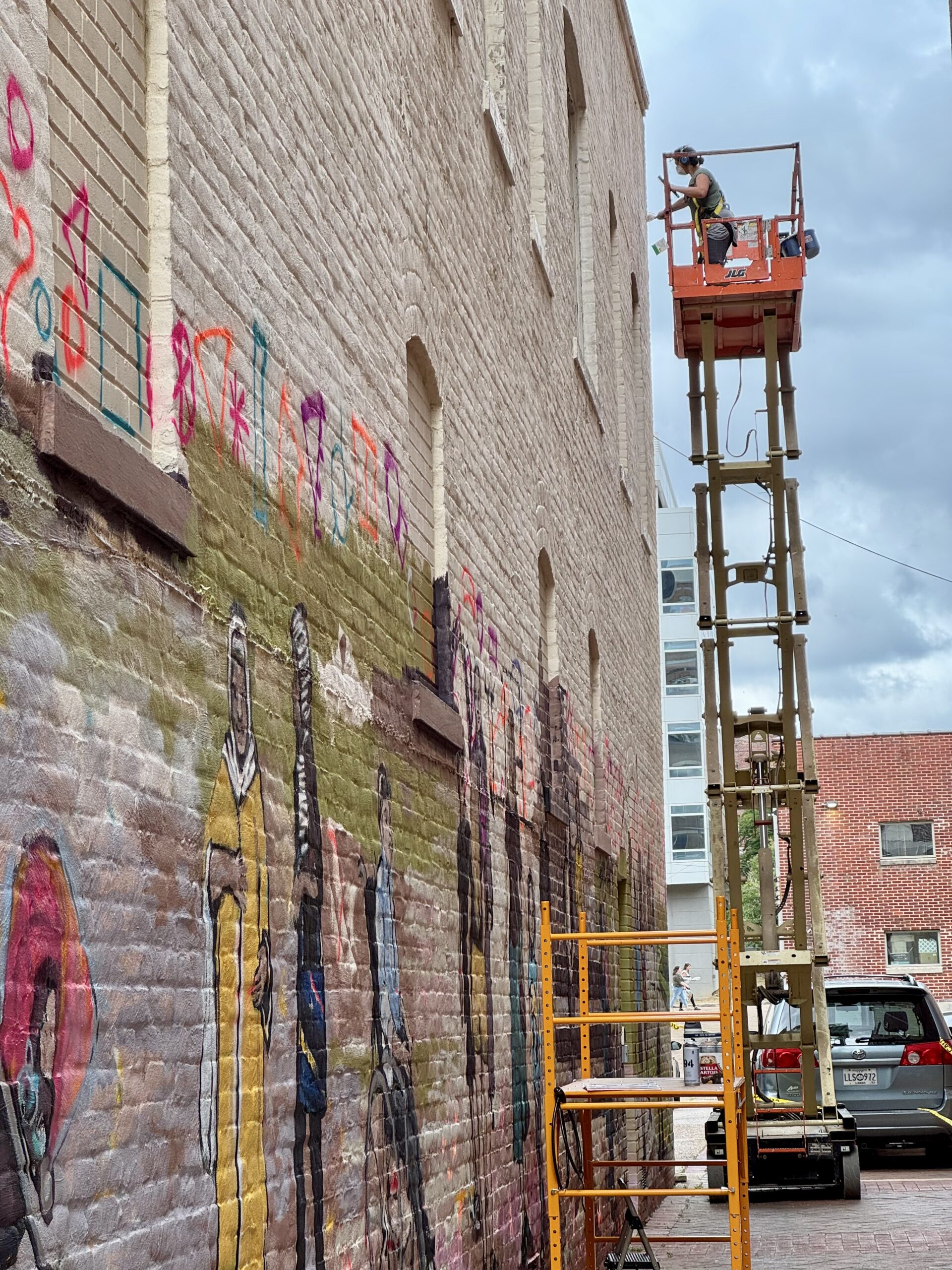
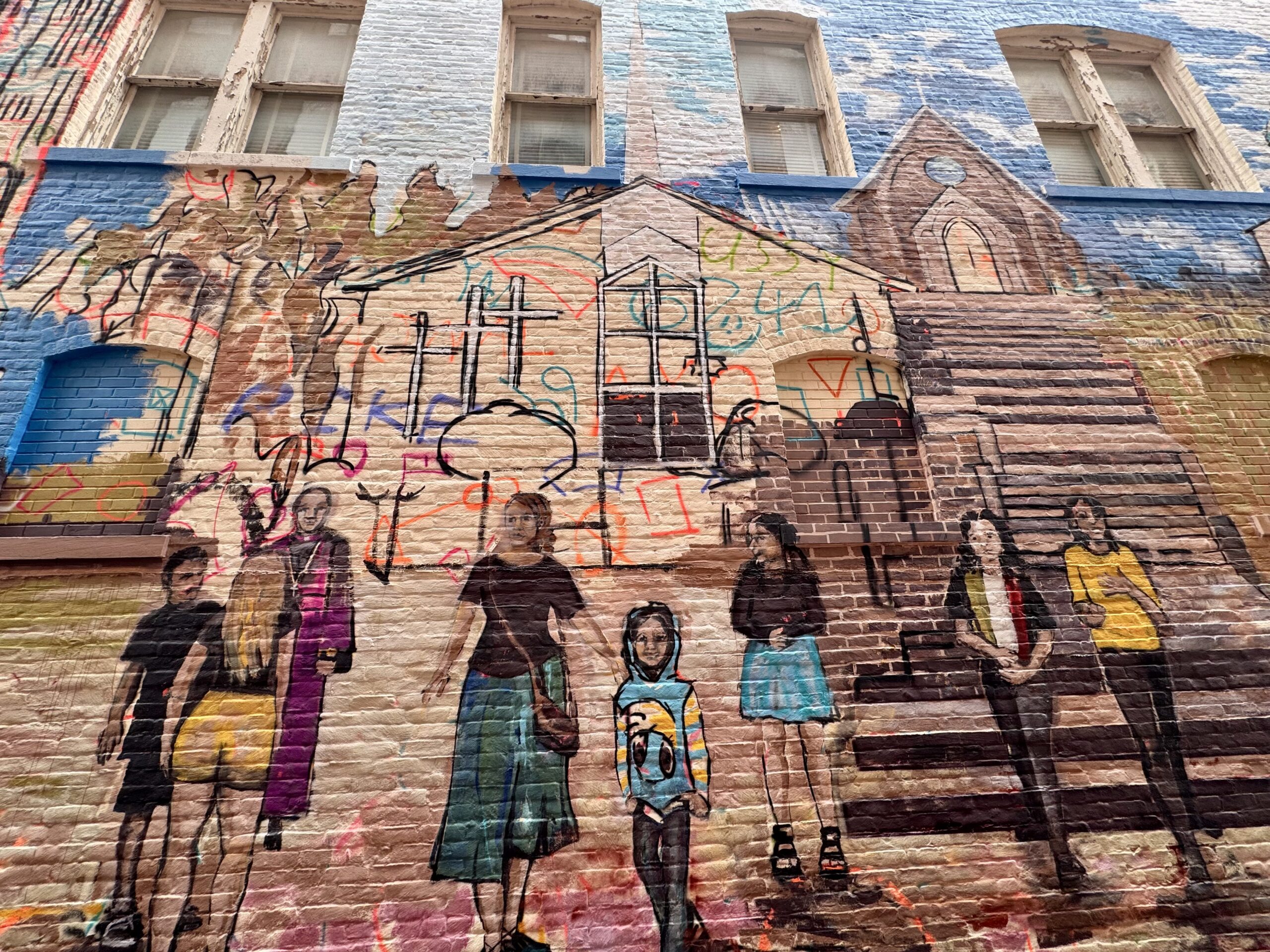
All of the talented artists who shared a vision for what a mural might depict gave us great ideas to consider. But the artist who quickly rose to the top in her vision was local artist Andrea Kostyal. Kostyal’s amazing mural became an inspired realization of her proposal—showing differing and beautiful architectural styles of some of our worshipping spaces, and also incorporating the story of our ministry throughout the Diocese.
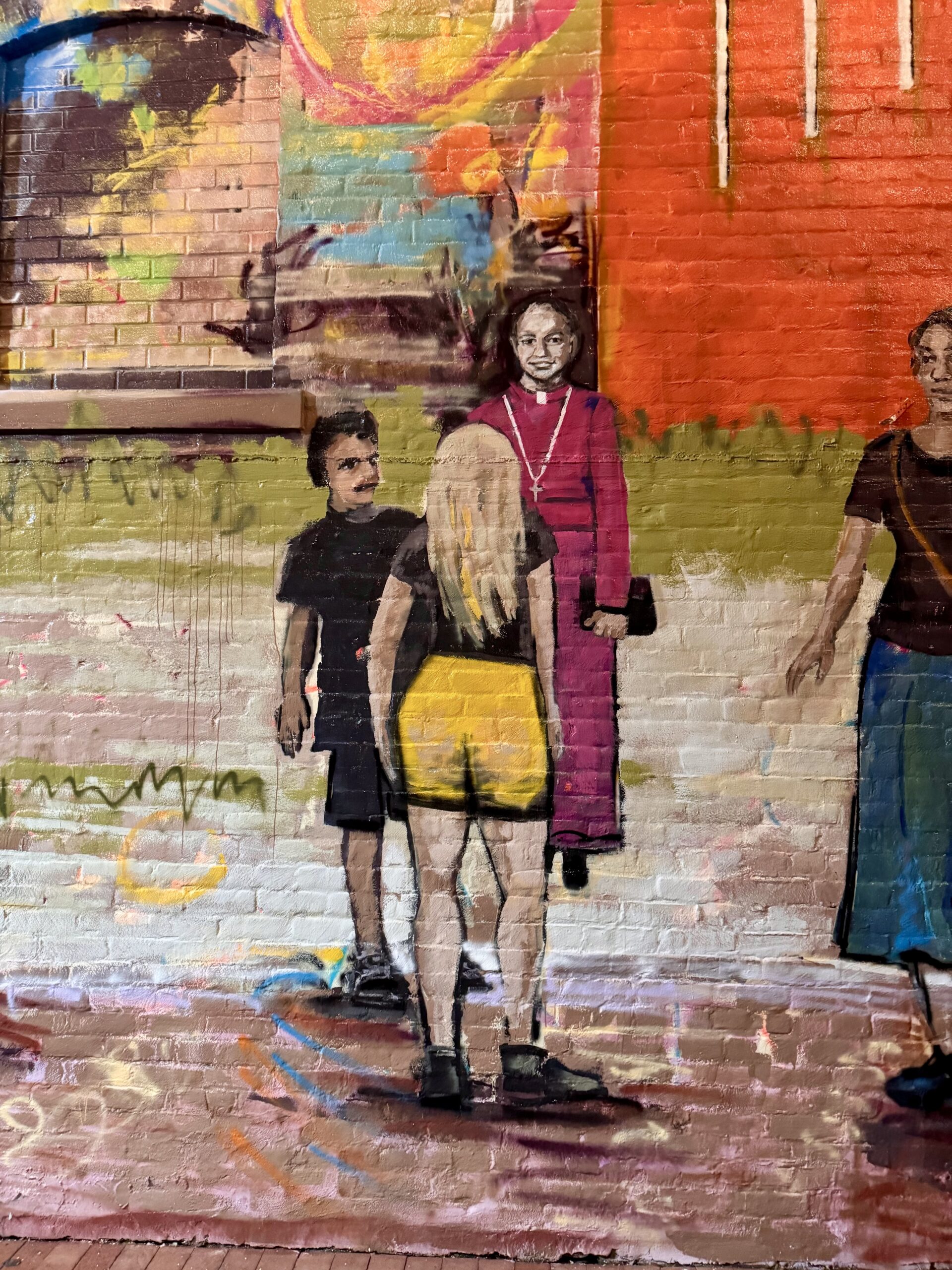
The mural offers glimpses of our Diocesan history, from the earliest worshipping communities formed along the Mississippi River, where plantations dotted the landscape: Christ Church, Church Hill (1820); Trinity Church, Natchez (1822); St. Paul’s, Woodville (1823); St. James’ Church, Port Gibson (1826); Christ Church, Vicksburg (1835). In addition to offering depictions of the variety of architectural styles found throughout the Diocese, the mural also includes depictions of three of our Bishops who have been part of a tremendous story of who we are as Episcopalians serving all of God’s people in Mississippi.
By 1826, when the first Convention of the Diocese gathered, there was not yet a bishop diocesan, as none had been elected; provisional bishops filled that vacancy. The Rt. Rev. William Mercer Green was elected the first bishop in 1849. The Diocese grew to 33 churches during Bishop Green’s episcopacy. He served until his death in 1887. Bishop Green was focused on expanding the ministry of the church, including ministry among enslaved—and later, freed—black persons in Mississippi. Baptisms of black persons—n no small measure controversial among Christian slaveholders—actually began before Bishop Green’s episcopate, and continued on during it. It is reported that as early as 1827, services for enslaved black persons had also begun: The records of Christ Church, Church Hill, indicate that, between roughly 1820 and 1880, more colored (likely, all enslaved) persons were baptized at Christ Church than white persons (By 1877, records from Christ Church indicate that about 52% of the baptisms had been black persons, which would be proportionate to the Mississippi census of 1860 showed that 55% of the state’s population was black.). Bishop Green is depicted on the mural as baptizing some of these black persons at Church Hill.
Bishop Green also ordained the first black clergyperson in Mississippi—a deacon named George Jackson—who may well have been the first black person ordained in a white Christian denomination in the South. Bishop Green had begun a theological formation school where Jackson was apparently prepared for ministry alongside white aspirants.
The second Bishop to be depicted on the mural is Bishop John Allin, who would go on to become Presiding Bishop of The Episcopal Church (and for whom the building is named). Bishop Allin served during a particularly tumultuous period in our nation (co-adjutor, 1961-66; diocesan 1966-74). He became part of an interfaith effort in Mississippi, the Committee of Concern, which worked to rebuild black churches that had been burned in Mississippi during the summer of 1964; black churches had been seen as hubs and organizing sites for nonviolent protesters as desegregation and voting rights efforts grew in Mississippi. The goal of the Committee of Concern was to rebuild 100 black houses of worship that had been destroyed; Bishop Allin was largely responsible for raising funds and resources (labor and materials) for rebuilding the churches. He is depicted on the mural in front of one of the rebuilt churches, Mt. Zion Methodist Church in Philadelphia, Mississippi, where the memorial to slain Civil Rights workers Andrew Goodman, James Chaney and Michael Schwerner is housed. Bishop Allin accepted the church’s invitation to preach for the rededication of the rebuilt Mt. Zion Church.
The third Bishop to be included on the mural is Bishop Duncan M. Gray, Jr., well-remembered, while he was Rector of St. Peter’s Church, Oxford, for interceding and attempting to disperse the crowds as students at Ole Miss protested the admission of James Meredith as a student; Bishop Gray is depicted near the image of St. Andrew’s Cathedral. James Meredith is also depicted on the mural, walking with textbooks in hand.
To be certain, there are some Episcopalians who are not depicted on the mural. For example, Jefferson Davis, who is memorialized in plaques in multiple of our churches—is not depicted. Neither is Byron de la Beckwith, who I’m told was a communicant of Church of the Nativity, Greenwood; de la Beckwith was ultimately convicted for having murdered black civil rights leader Medgar Evers in 1963. The fact that they are not included is not indicative of the fact that they are not part of the fabric of our story as the Episcopal Church in Mississippi. In hindsight, it might have been wise to specifically ask that they—and perhaps, others—be depicted, if for no other reason than to remind us that, as tremendous as our story of ministry among God’s people in Mississippi truly is, our collective story has not always been about love, inclusion and grace.
We are thrilled to see Kostyal’s completed mural—with some of our houses of worship, three of our Bishops, and a wide range of God’s people—on display. The ribbon-cutting for the mural is scheduled—weather-permitting—for Wednesday, August 5 at 10:00 a.m., and all are invited to see this amazing public art and share in its unveiling for the community.