Loving witnesses
Evangelism and God’s love through the lens of You are Special by Max Lucado
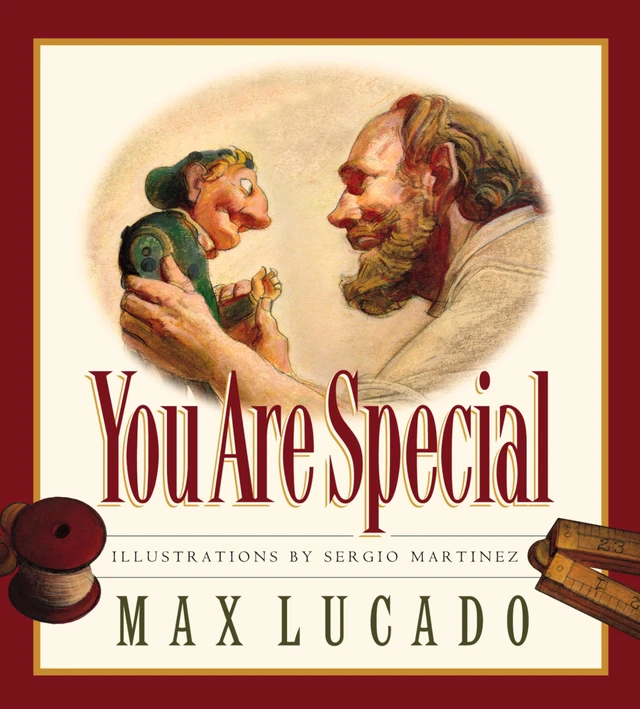
I’ve often thought that the mark of a great children’s book is what that book also teaches to the adults who share it with children around them. Such is the case for me with a fabulous children’s book entitled, You Are Special, by Max Lucado. In this book, we are introduced to a community of Wemmicks—wooden characters carved and given life by the woodcarver, Eli, who lives in a workshop just above the Wemmicks’ village. The Wemmicks are, like humans, each unique—with their own gifts and skills and talents. And, also like humans, the Wemmicks have the free will to enjoy those gifts and skills and, as one might expect, comment on the other Wemmicks around them. The especially attractive and talented Wemmicks all seem to have been given star stickers by their neighbors; the especially awkward and differently-talented Wemmicks all seem to have been given dot stickers by their neighbors. The more star stickers a Wemmick receives, the more confident and self-assured that Wemmick becomes; and the more stars a Wemmick has, the more stars that Wemmick seems to attract from neighbors.
 But the more dot stickers a Wemmick has received, the less confident and self-assured that Wemmick becomes—and the more dots the Wemmick seems to attract from neighbors.
[One might compare the stars and dots to our “thumbs up” and “thumbs down” on social media today.]
The story introduces us to a Wemmick named Punchinello. Punchinello perceives himself to be awkward and not liked. He has no stars; his neighbors have only labeled him with the dot stickers. The more dots he receives, the more dots he seems to attract. Punchinello’s self-confidence has been eroded.
One day, Punchinello meets a Wemmick named Lucia who has neither dots nor stars; he asks her how their neighbors aren’t able to leave their marks on her. Lucia tells Punchinello to go up to visit their maker, Eli, at his big workshop. It takes a while, but with Lucia’s encouragement, Punchinello finally musters up the courage to go.
To Punchinello’s shocked surprise, Eli greets him by name when he arrives at the workshop. Eli explains that of course he knows Punchinello’s name: He made him. Eli explains something else: He loves Punchinello—and all of the Wemmicks he has made.
The two speak for a while, and before Punchinello leaves, Eli asks him to come again. Eli assures Punchinello that the more he trusts Eli’s love, the less all of the other Wemmicks’ hurtful words will mean to him.
And even as Punchinello leaves Eli’s big workshop, the dots begin to fall off.
Such, to me, is the story of God’s love for us: The more we turn to God in prayer, and the more we trust that we are indeed God’s beloved, the less we concern ourselves with how the world might see us. We trust that we are God’s and loved by God—and that’s what matters.
From early in Genesis, we learn that we are made in God’s image and likeness. We learn throughout the Old Testament that God is a loving and forgiving God who keeps God’s promises and gives us many chances—even gives us new names when a fresh start is warranted. This loving God sent his Son to live among us and to teach us through loving, patient example the depths of God’s love. That Son would surrender himself to death on a cross in love for us. Having the knowledge that we are loved by our Creator—unconditionally, immeasurably—is the greatest of gifts given to us.
And one of the greatest gifts we can give to one another (like Lucia) is pointing one another to that love. There are certainly times that we can serve as a guiding star, a lodestar, to someone else who at least for the moment is having a hard time recognizing God’s love. When we look back at our lives, we can likely recall persons who loved us enough to point the way to God’s love. This time of year—with All Saints, Thanksgiving, Advent and Christmas near—we celebrate those lodestars who have pointed the way to Christ for us, reminding us always that we are God’s beloved, and surrounding us with a cloud of loving witnesses, both in this world and the next, to bear us up and shape our lives. May we become those lodestars, too, for neighbors in need of our reminder of God’s love.